
Addiction does not discriminate. Women from different ages, backgrounds, professions, and social circumstances can develop problems with alcohol or drugs. Yet, female substance abuse often remains hidden for years, sometimes even from the closest family members.
Women may become very skilled at concealing their substance use because of shame, fear of judgment, family responsibilities, social expectations, or concerns about how seeking treatment might affect their relationships and reputation.
For families in Kolkata and across West Bengal, recognizing the less obvious signs of addiction can be the first step toward helping a loved one begin recovery.
Women can face unique pressures that make addiction difficult to recognize. A woman may continue managing her household, caring for children, maintaining a job, or fulfilling family responsibilities while privately struggling with alcohol or drug dependence.
Unlike the stereotypical image of addiction, substance dependence does not always involve obvious behavioral or social deterioration in the early stages.
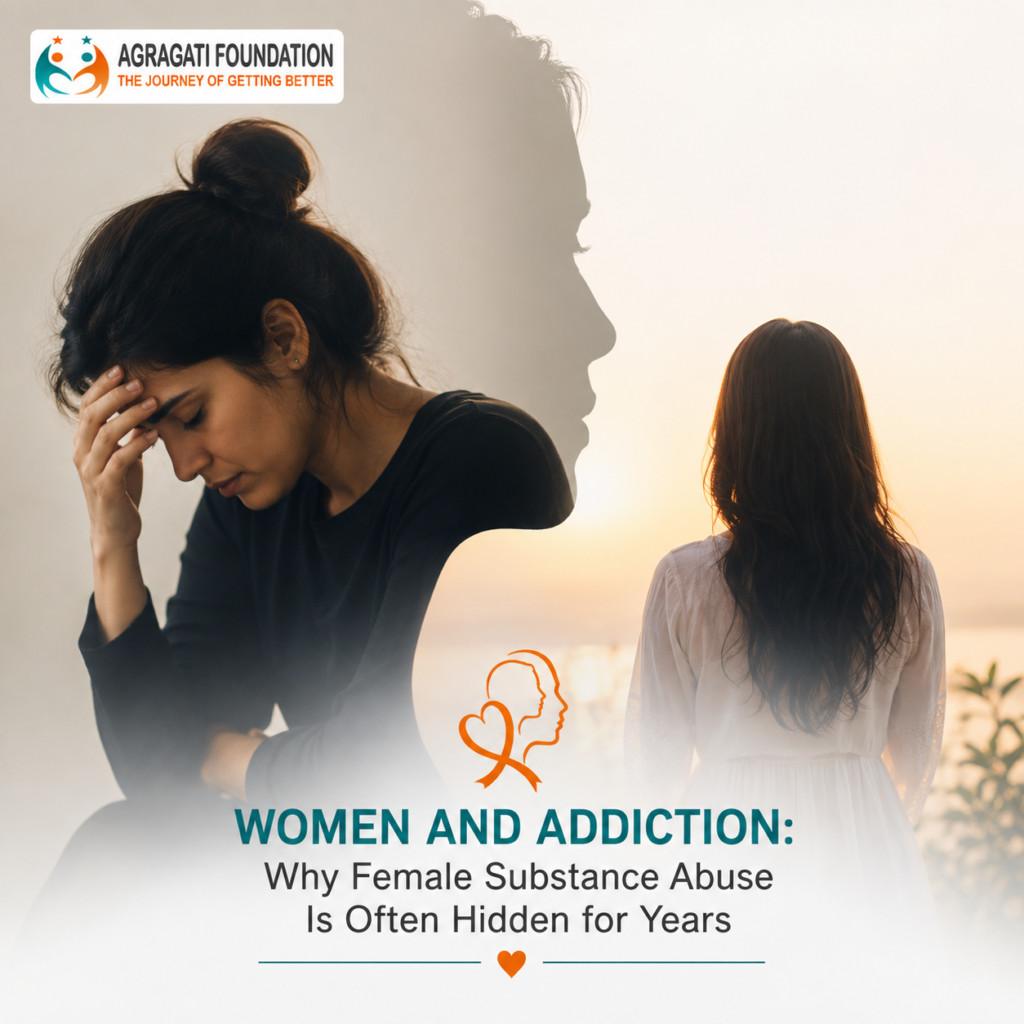
A woman may appear to be functioning normally while increasingly relying on a substance to cope with stress, anxiety, loneliness, relationship difficulties, emotional pain, or everyday pressures.
Women may face particularly strong social expectations about how they should behave.
A woman struggling with alcohol or drugs may worry:
These fears can encourage secrecy and prevent women from asking for help.
Addiction can create a cycle of substance use, guilt, secrecy, and further substance use.
A woman may feel guilty about drinking or using drugs but may also use the substance to temporarily escape those difficult emotions.
Over time, she may become increasingly isolated and avoid discussing what she is experiencing.
Some women become extremely careful about concealing their substance use.
They may:
Because the behavior happens privately, family members may not recognize the problem until the addiction becomes more severe.
Women who are mothers, wives, daughters, or caregivers may continue performing their responsibilities despite developing an addiction.
This can create the impression that everything is fine.
A woman may prepare meals, take care of children, go to work, attend social functions, and maintain the household while struggling with substance dependence behind closed doors.
This is sometimes referred to as “high-functioning” substance use.
However, maintaining responsibilities does not mean that substance use is harmless or that treatment is unnecessary.
Some women use alcohol or drugs as a way of coping with difficult emotions.
Stress, unresolved trauma, relationship problems, grief, loneliness, anxiety, or other emotional difficulties can sometimes contribute to problematic substance use.
This does not mean that every woman experiencing emotional difficulties will develop an addiction. However, when substance use becomes the primary way of coping, dependence can gradually develop.
That is why effective treatment should look beyond the substance itself and consider the person’s emotional, psychological, social, and family needs.
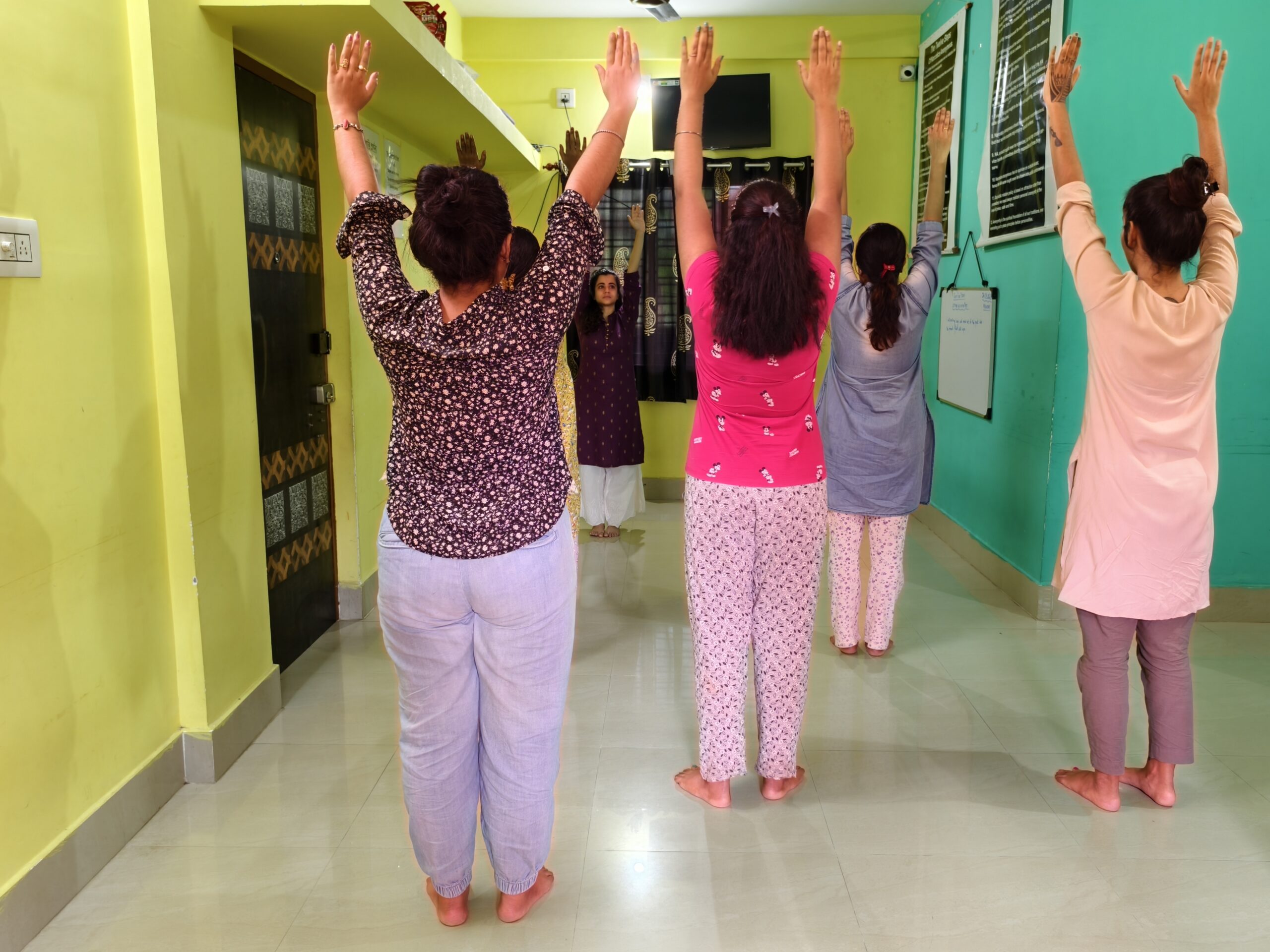
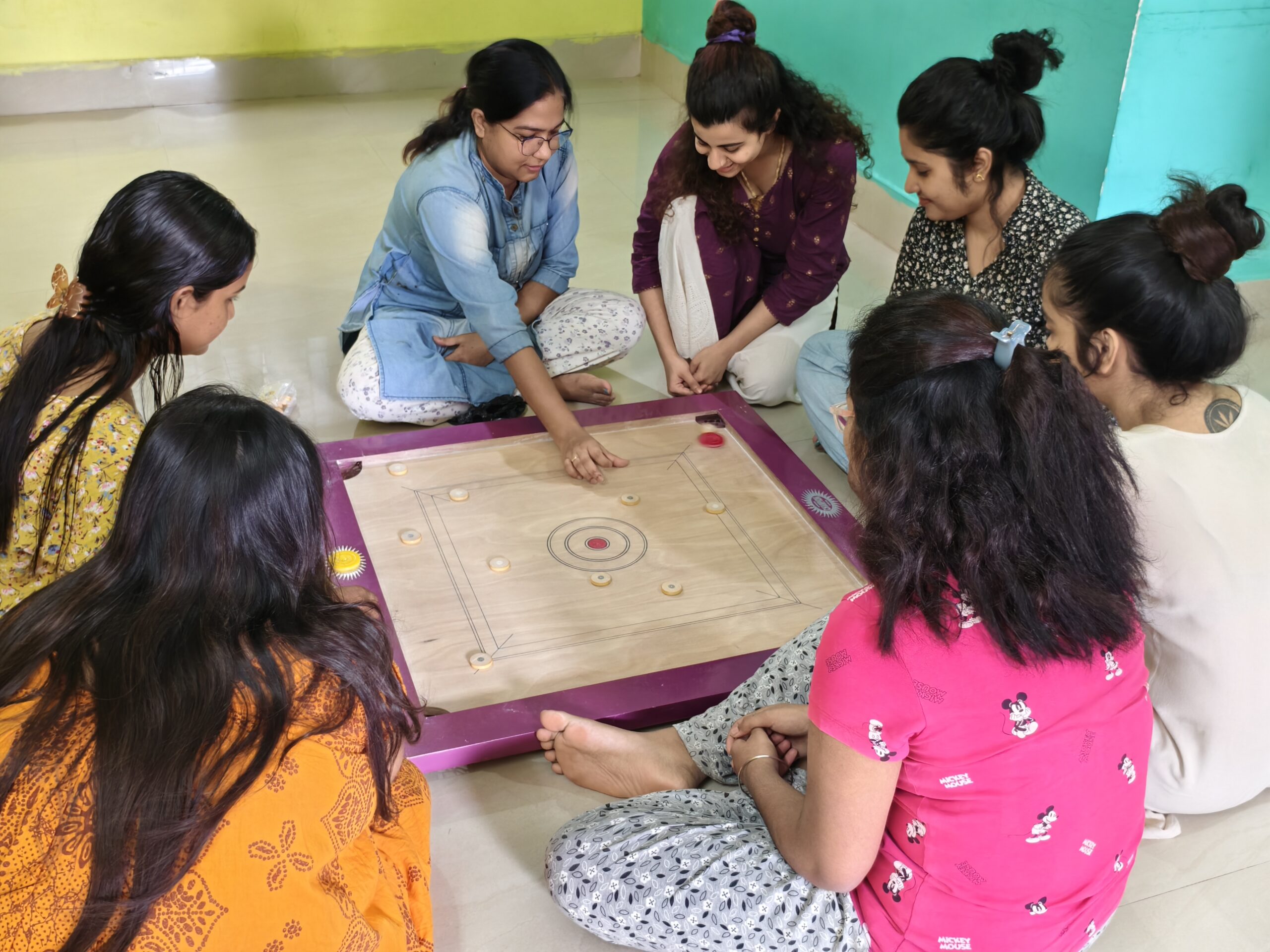
The Love and Care Program at our rehabilitation center provides compassionate support, therapy, and holistic healing for individuals on their recovery journey, fostering emotional well-being, resilience, and a brighter future.
Our rehabilitation center's Treatment Approach combines personalized therapy, medical care, and holistic healing, focusing on physical, emotional, and mental well-being to empower individuals toward sustainable recovery and a healthier future.
Our Rehabilitation Program offers personalized care, therapy, and support to help individuals regain independence, overcome challenges, and achieve lasting recovery in a nurturing and empowering environment.



Not all substance dependence involves alcohol or illegal drugs.
Dependence can also develop with certain prescription medications when they are misused or taken in ways that are not medically intended.
Because prescription medicines are associated with healthcare, families may not immediately recognize problematic use.
Changes such as repeatedly seeking prescriptions, taking medication more frequently than directed, becoming preoccupied with obtaining medication, or experiencing distress when medication is unavailable may warrant professional assessment.
No single behavior proves that someone has an addiction. However, several changes occurring together may indicate that professional help is needed.
Possible warning signs include:
The most important factor is often the pattern of behavior over time, rather than one isolated incident.
Recognizing a problem and accepting help are two different things.
A woman may understand that her substance use is becoming problematic but still feel unable to seek treatment.
She may worry about:
These concerns are real, and they should be approached with compassion rather than criticism.
If you suspect that a woman you care about is struggling with addiction, confrontation and humiliation are unlikely to create lasting change.
Instead, try to approach the situation calmly and compassionately.
Choose a private and appropriate time.
Use statements such as:
“We are worried about you and want to support you.”
rather than:
“You have ruined everything because of your addiction.”
The goal is to open communication rather than create another reason for secrecy.
Addiction is a complex health and behavioral problem. Shaming someone can increase isolation and make it harder for them to seek help.
Compassion does not mean ignoring harmful behavior. It means addressing the problem while continuing to treat the person with dignity.
If substance use is affecting a woman’s health, relationships, responsibilities, finances, or ability to control her behavior, professional evaluation can help determine the appropriate level of care.
Depending on the individual’s needs, treatment may involve detoxification, residential rehabilitation, counseling, behavioral therapies, family support, relapse-prevention planning, and continuing care.
Women can have different treatment needs and experiences from men.
A female-focused rehabilitation environment can provide a setting where women may feel more comfortable discussing sensitive experiences, family pressures, relationships, trauma, self-esteem, and other issues connected to their recovery.
At Agragati Foundation, a female-focused rehabilitation approach can help create a supportive environment where women are encouraged to move beyond shame and secrecy and work toward a healthier, more independent life.
Recovery is not simply about stopping alcohol or drugs. It is also about learning healthier coping mechanisms, rebuilding relationships, developing self-confidence, understanding triggers, and preparing for life after treatment.
One of the most dangerous misconceptions about addiction is that someone has to “hit rock bottom” before treatment can work.
That is not true.
The earlier a substance-use problem is recognized and addressed, the earlier a woman can begin receiving appropriate support.
If you notice significant changes in someone you love, don’t wait for the problem to become a crisis. A compassionate conversation and professional assessment can be an important first step.
Female addiction can remain hidden behind responsibilities, relationships, social appearances, and years of silence. But being hidden does not mean it cannot be treated.
With appropriate professional support, a safe recovery environment, counseling, family involvement, and continuing care, women can work toward recovery and rebuild their lives.
Agragati Foundation is committed to supporting women on their journey from addiction toward recovery, dignity, confidence, and a healthier future.

Bespoken Female Rehabilitation Centre in Kolkata Provides an Individual Recovery Program which best suits the Need of the Clients. Our highly trained Team from across India helps them in their Journey of Recovery.
Agragati Foundation© Copyright 2025 Designed and Developed by Jatin