
Addiction is not only a problem with drugs or alcohol. It can gradually affect almost every part of a woman’s life—her thoughts, emotions, relationships, responsibilities, confidence, and connection with her family.
For women, the consequences of addiction can be particularly complicated because social expectations often place significant emphasis on roles such as mother, wife, daughter, caregiver, and homemaker. Fear of judgment and stigma can also make it difficult for women to acknowledge a problem or seek treatment. Research on substance use in women has highlighted the links between addiction, mental-health difficulties, stigma, limited social support, and family disruption.
At Agragati Foundation – Female Rehabilitation Centre in Kolkata, understanding these interconnected challenges is an important part of supporting women through recovery.
When a woman develops an addiction, the substance may initially appear to be the main problem. Over time, however, its effects can extend into her emotional wellbeing, mental health, relationships, finances, parenting, work, and everyday responsibilities.
Addiction can also create a cycle:
Stress → substance use → temporary relief → guilt or consequences → more stress → continued substance use.
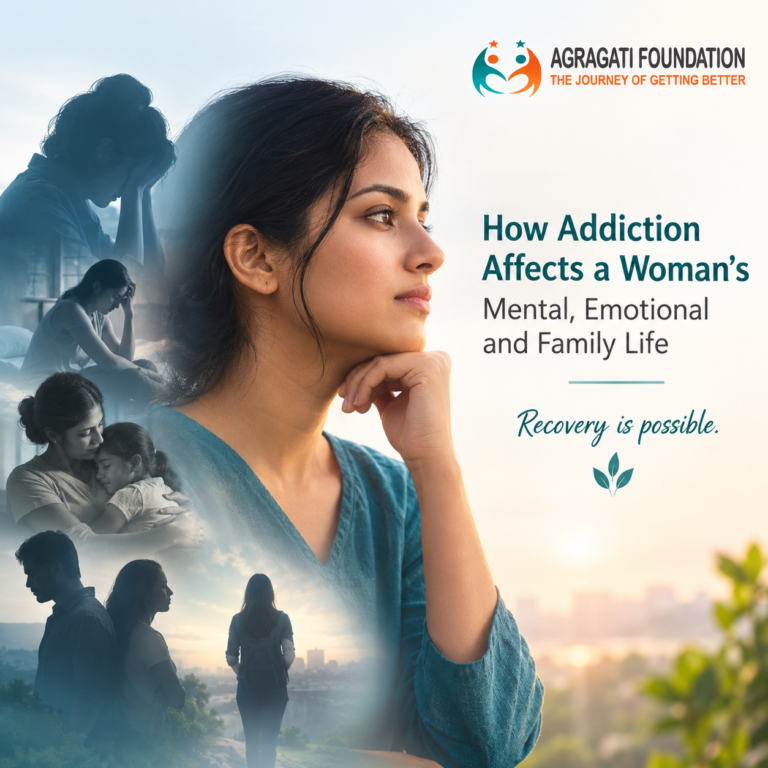
1. How Addiction Can Affect a Woman’s Mental Health
Substance use and mental health can influence each other.
Some women may use substances as a way of coping with emotional distress, while ongoing substance use can also worsen psychological difficulties.
Research has found that women with substance-use disorders can experience co-occurring conditions such as depression and anxiety, making integrated treatment particularly important.
A woman struggling with addiction may experience:
These symptoms can make everyday responsibilities feel increasingly difficult.
Some women may experience increased:
Substances may temporarily appear to reduce these feelings, but relying on substances as a coping mechanism can ultimately make the cycle more difficult to break.
As substance use becomes more frequent or severe, a woman may find it harder to concentrate, make decisions, remember things, or manage everyday responsibilities.
This can affect her work, parenting, relationships, and ability to manage household responsibilities.
2. The Emotional Impact of Addiction
The emotional consequences of addiction can be profound.
A woman may know that her substance use is affecting her life but feel unable to stop. This can create an internal conflict between wanting to change and feeling trapped in the addiction.
Many women experience guilt about how their substance use may have affected their family.
A mother may worry:
“Am I failing my children?”
A wife may think:
“What has happened to my marriage?”
A daughter may fear:
“What will my parents think of me?”
These feelings can become overwhelming.
Unfortunately, shame can also encourage secrecy, making it harder to seek professional support.
Addiction can gradually change the way a woman sees herself.
She may stop believing in her abilities and begin defining herself entirely by her addiction or past mistakes.
Recovery involves helping her rediscover that she is more than her substance use.
3. Addiction Can Affect Relationships
Relationships are often among the first areas to experience the effects of addiction.
Substance-use disorders can affect communication, trust, family cohesion, and patterns of conflict within a household.
A woman may become increasingly secretive or withdrawn.
Family members may become suspicious.
Arguments may become more frequent.
Trust may gradually disappear.
Over time, relationships that were once supportive can become sources of conflict and emotional distance.
Research specifically examining women’s substance-use treatment needs emphasizes the importance of relationships and social support in recovery
4. The Impact on Marriage and Partnerships
Addiction can put considerable pressure on a relationship.
A partner may experience:
At the same time, the woman struggling with addiction may feel misunderstood, criticized, or rejected.
This can create a cycle where family conflict increases emotional distress, and emotional distress contributes to continued substance use.
Professional counseling can help families understand these patterns and establish healthier ways of communicating.
5. When Addiction Affects Motherhood
For mothers, addiction can bring another layer of emotional pressure.
A mother may struggle to remain emotionally or physically present for her children. Recent research involving mothers receiving substance-use treatment found that participants described challenges around being fully present as parents and concerns about how substance use affected their children.
This does not mean that a woman with addiction is a bad mother.
It means that addiction can interfere with the ability to function in the role she deeply cares about.
Feelings of guilt can become particularly intense:
“My children deserve better.”
Instead of using guilt as a reason to condemn a woman, families can use it as an opportunity to encourage appropriate treatment and recovery.
6. Addiction Can Change Family Dynamics
When one person develops an addiction, the entire family can be affected.
Family members may begin changing their own behavior to manage the situation.
For example:
These patterns can unintentionally allow addiction to continue.
Substance-use disorders can influence family communication, conflict, closeness, and overall family functioning.
Family education and counseling can therefore be an important component of recovery.
7. Social Isolation Can Become a Serious Problem
As addiction progresses, a woman may gradually withdraw from friends, relatives, colleagues, and activities she once enjoyed.
She may avoid social situations because she is worried that people will notice her substance use.
Alternatively, she may increasingly spend time with people or in environments connected to substance use.
This can reduce access to healthy support.
For women, social support is particularly important because relationships can play a significant role in treatment engagement and recovery.
8. Financial and Work-Related Problems
Addiction can also affect a woman’s professional and financial life.
Possible consequences include:
Financial problems can then create additional stress, potentially reinforcing the cycle of substance use.
9. Why Women May Delay Seeking Treatment
If addiction is causing so many problems, why don’t more women ask for help earlier?
There can be many reasons.
Women may fear:
Indian research has identified stigma, shame, family responsibilities, lack of support, and practical barriers among factors that can prevent women from accessing addiction treatment.
This is why creating a safe, respectful, women-focused treatment environment matters.
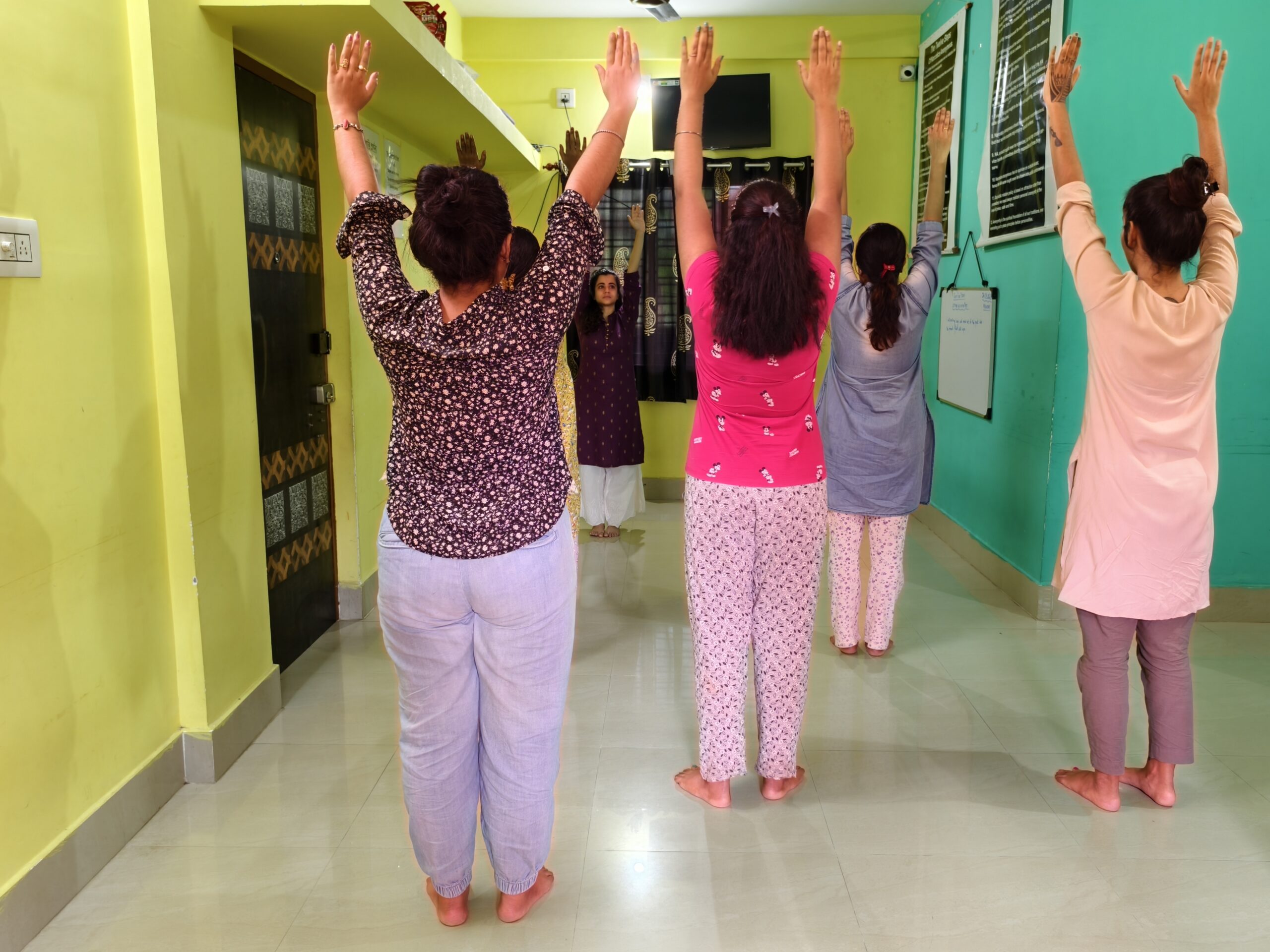
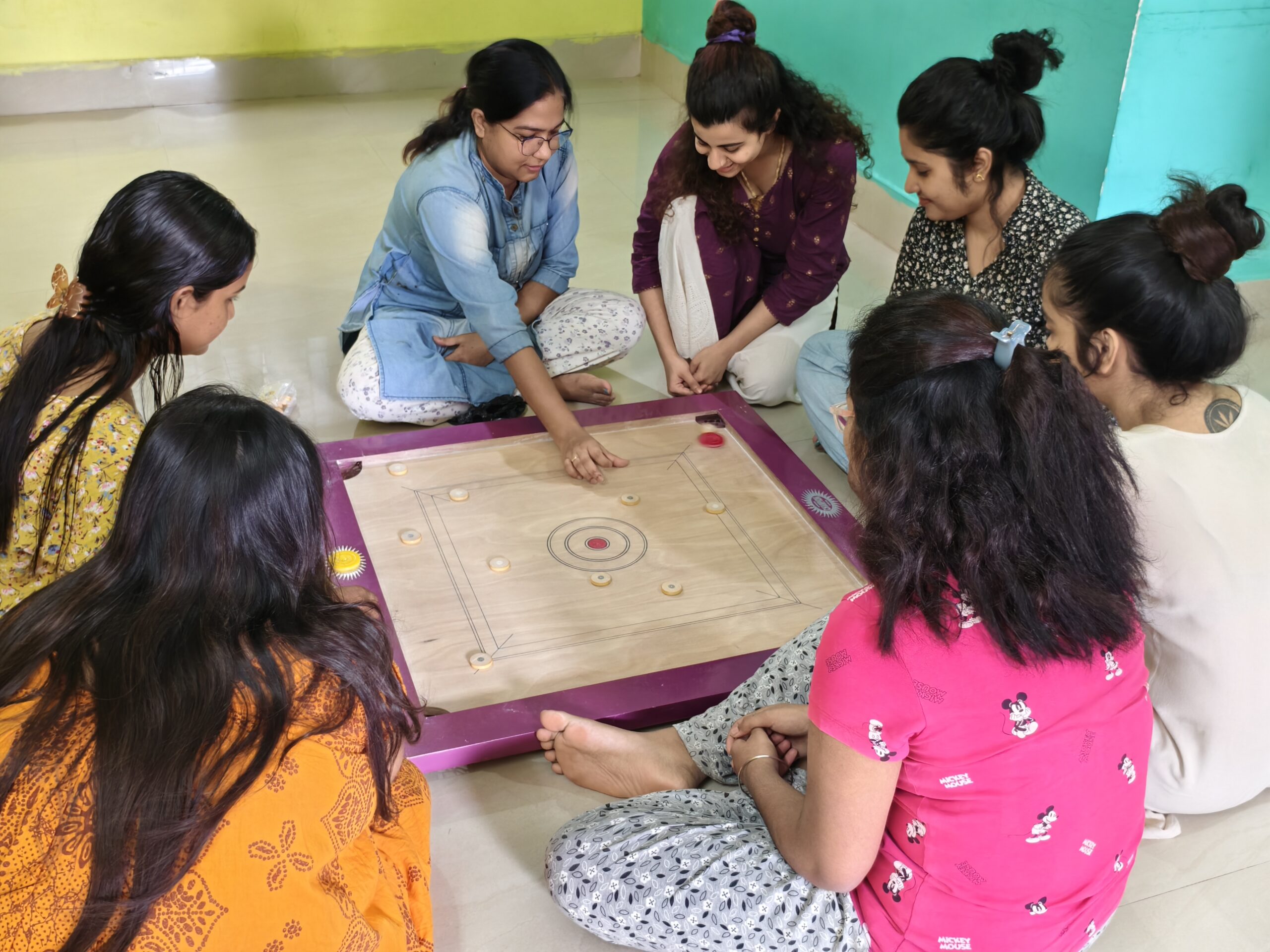
The Love and Care Program at our rehabilitation center provides compassionate support, therapy, and holistic healing for individuals on their recovery journey, fostering emotional well-being, resilience, and a brighter future.
Our rehabilitation center's Treatment Approach combines personalized therapy, medical care, and holistic healing, focusing on physical, emotional, and mental well-being to empower individuals toward sustainable recovery and a healthier future.
Our Rehabilitation Program offers personalized care, therapy, and support to help individuals regain independence, overcome challenges, and achieve lasting recovery in a nurturing and empowering environment.



10. Why Female-Focused Rehabilitation Can Help
Women may have treatment needs that are shaped by relationships, caregiving responsibilities, trauma, social expectations, and other life circumstances.
Evidence-based guidance on women’s substance-use treatment recommends approaches that consider women’s relationships, health needs, caregiver roles, culture, trauma, and broader social circumstances.
A female rehabilitation environment can provide women with an opportunity to discuss sensitive issues in a setting where they may feel more comfortable.
Treatment can address:
The objective is not simply to stop substance use.
The objective is to help the woman rebuild her life.
11. The Role of Family in Recovery
Family involvement can be extremely valuable when it is appropriate and safe.
Families can support recovery by:
A woman may already carry significant guilt and shame. Constant criticism can make communication more difficult.
Addiction treatment is not a punishment. It is an opportunity to receive structured support.
Supporting someone does not mean protecting them from every consequence of their behavior.
Healthy boundaries can protect both the woman and her family.
Understanding addiction as a complex health condition can help family members respond with greater empathy and less blame.
Recovery does not necessarily end when residential treatment ends. Counseling, follow-up care, support networks, and relapse-prevention strategies can remain important.
12. Recovery Can Restore More Than Sobriety
Recovery can mean much more than stopping drugs or alcohol.
For a woman, recovery may mean:
The journey may take time, but every positive step matters.
At Agragati Foundation – Women Rehabilitation Centre Kolkata, the focus is on helping women move toward recovery in a supportive and compassionate environment.
Located in the Kolkata area, Agragati Foundation is a female-focused rehabilitation centre dedicated to supporting women dealing with addiction.
The journey toward recovery is different for every woman. Some may need help understanding their addiction. Others may need support rebuilding family relationships, managing emotions, developing healthy coping skills, or preparing for life after rehabilitation.
A compassionate treatment environment can give women the opportunity to work on these areas without reducing them to their addiction.
Families should consider seeking professional guidance when substance use is affecting a woman’s:
You do not necessarily have to wait for a crisis before seeking help.
Early professional assessment can help families understand the situation and explore appropriate treatment options.
At Agragati Foundation, the focus is on providing women with a supportive environment where recovery can begin with dignity and compassion.
Female addiction treatment should recognize that every woman has her own history, challenges, strengths, and reasons for wanting to recover.
The goal is not simply to help a woman stop using drugs. It is to help her develop the skills, confidence, awareness, and support needed to build a healthier life beyond addiction.
Recovery can mean rebuilding relationships, restoring self-confidence, developing healthy routines, discovering new interests, and learning how to face life’s challenges without depending on substances.
If you are asking, “Can a woman recover from drug addiction?”, the answer is yes.
Addiction can be powerful, but it does not have to define a woman’s future.
With the right professional treatment, a safe environment, compassionate support, and a commitment to continuing recovery, women can move from active addiction toward a healthier and more fulfilling life.
For families looking for a female rehabilitation centre in Kolkata, seeking professional guidance can be the first step.
Agragati Foundation — The Journey of Getting Better.
If you are concerned about a woman struggling with drug addiction, reach out to a qualified addiction-treatment professional to discuss her individual needs and the appropriate treatment options.

Bespoken Female Rehabilitation Centre in Kolkata Provides an Individual Recovery Program which best suits the Need of the Clients. Our highly trained Team from across India helps them in their Journey of Recovery.
Agragati Foundation© Copyright 2025 Designed and Developed by Jatin