
Recovery from addiction is a courageous journey—but it’s not always easy. For many women, emotional triggers can quietly pull them back toward old habits, leading to relapse.
At Agragati Foundation Women Rehab in Kolkata, we understand that recovery is not just physical—it’s deeply emotional. Recognizing and managing these triggers is one of the most important steps toward long-term healing.
Emotional triggers are feelings or situations that create an intense urge to return to substance use. These triggers are often linked to past trauma, stress, or unresolved emotions. For women, these triggers can be more complex due to social pressures, relationships, and emotional responsibilities.
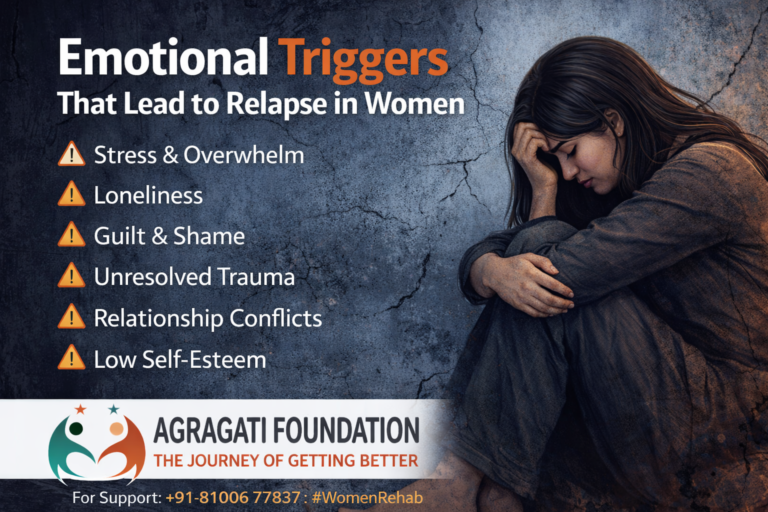
Balancing family, work, and societal expectations can create intense stress. Without healthy coping mechanisms, women may turn back to substances for relief.
Feeling alone or unsupported can be a powerful trigger. Many women struggle silently, making them more vulnerable to relapse.
Women often carry deep guilt—especially mothers or caregivers. These emotions can lead to self-destructive patterns.
Past experiences like abuse, loss, or toxic relationships can resurface during recovery, triggering emotional pain.
Arguments, breakups, or toxic environments can destabilize emotional well-being and increase relapse risk.
Negative self-image and lack of confidence can make women feel unworthy of recovery, leading to setbacks.
In Indian society, women often:
These factors make emotional triggers more intense and harder to manage without proper support.
Awareness is the first step. Recognizing what causes emotional distress helps in preventing relapse.
Yoga, meditation, journaling, and mindfulness can help manage emotions in a positive way.
Counseling and therapy provide a safe space to express emotions and heal from within.
The Love and Care Program at our rehabilitation center provides compassionate support, therapy, and holistic healing for individuals on their recovery journey, fostering emotional well-being, resilience, and a brighter future.
Our rehabilitation center's Treatment Approach combines personalized therapy, medical care, and holistic healing, focusing on physical, emotional, and mental well-being to empower individuals toward sustainable recovery and a healthier future.
Our Rehabilitation Program offers personalized care, therapy, and support to help individuals regain independence, overcome challenges, and achieve lasting recovery in a nurturing and empowering environment.


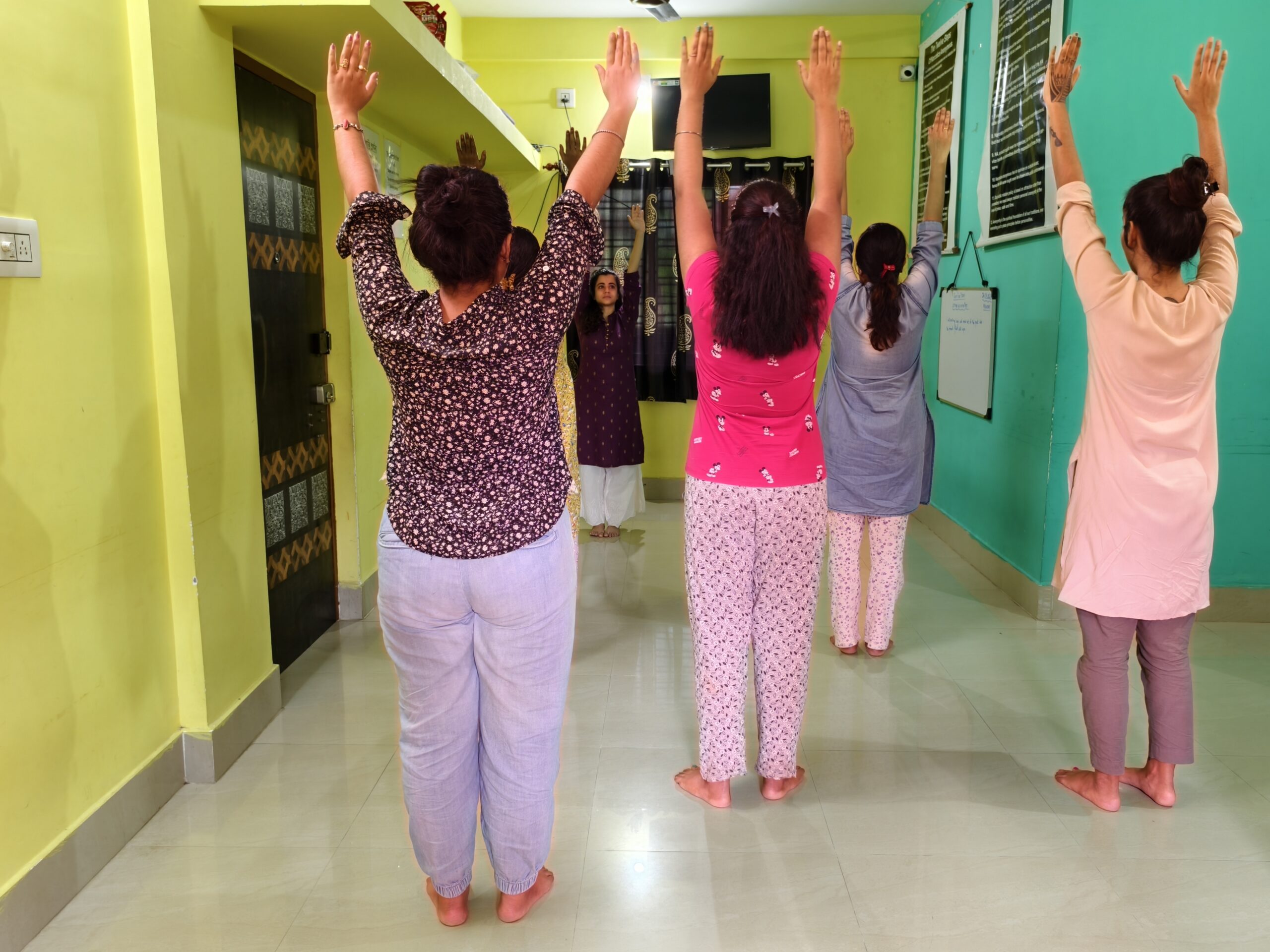

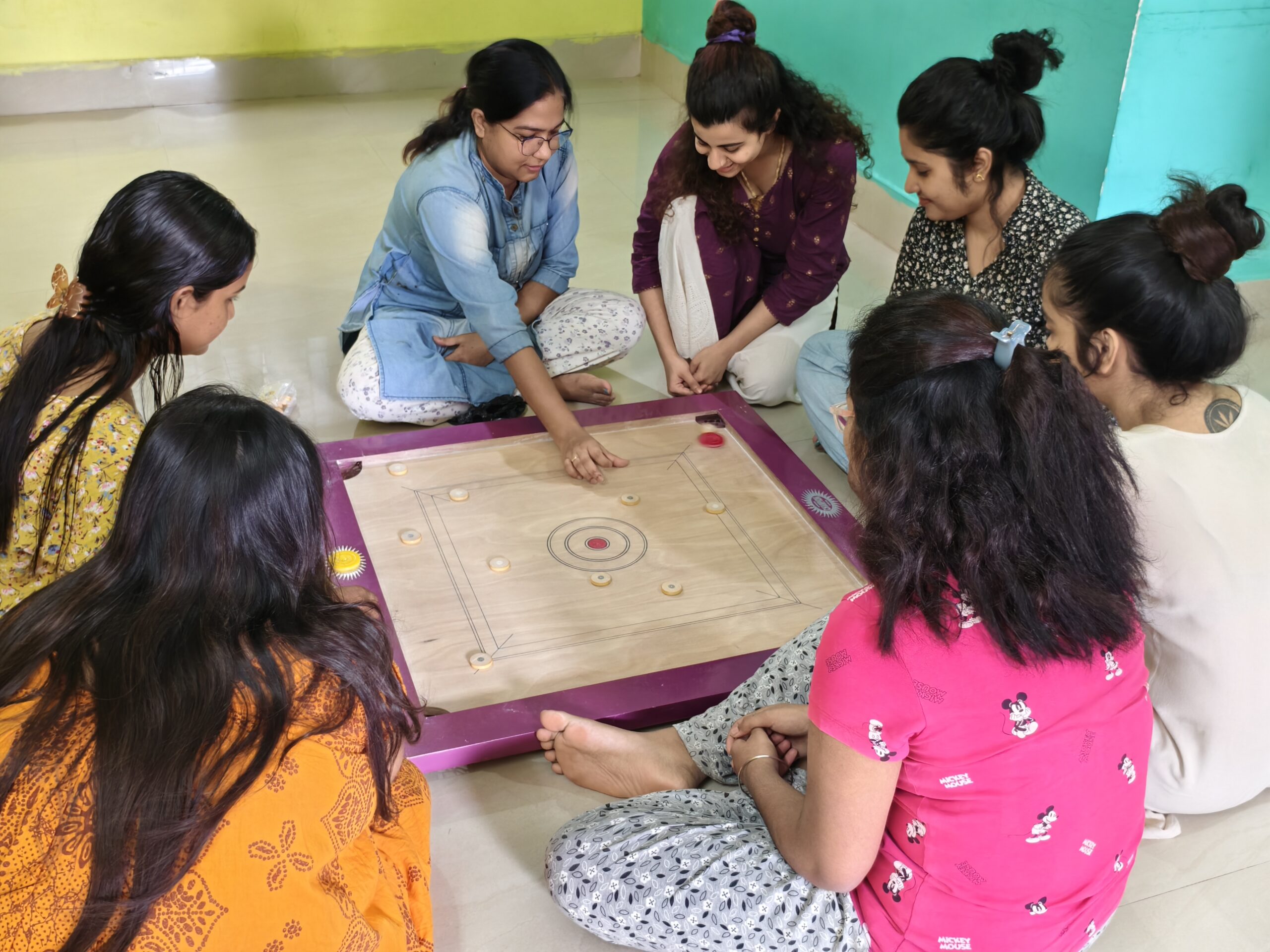
Surround yourself with people who understand and support your recovery journey.
Learning to face emotions instead of avoiding them builds resilience over time.
At Agragati Foundation Women Rehab in Kolkata, we provide:
Our goal is not just recovery—but long-term emotional stability and self-empowerment.
Relapse does not mean failure—it means there’s something deeper that needs healing. By understanding emotional triggers, women can take control of their recovery journey with confidence.
Emotional triggers are real, powerful, and often unavoidable—but they don’t have to control your life.
With the right support, awareness, and self-care, every woman can overcome these challenges and build a life free from addiction.

Bespoken Female Rehabilitation Centre in Kolkata Provides an Individual Recovery Program which best suits the Need of the Clients. Our highly trained Team from across India helps them in their Journey of Recovery.
Agragati Foundation© Copyright 2025 Designed and Developed by Jatin